

Ireland’s wet, mild climate is brilliant for keeping the grass green. It’s less brilliant for keeping your home dry. Between October and April, most Irish houses are fighting a constant battle with moisture, condensation and stale air. And if your home has been insulated or draught-proofed in recent years, the problem is probably worse than it used to be.
For the majority of Irish homes, a mechanical ventilation system with heat recovery (MVHR) is the most effective long-term solution. It continuously swaps stale, damp indoor air for filtered fresh air from outside, while recovering most of the heat that would otherwise be lost. But not every home needs a full whole-house system. Bathroom extractor fans, demand-controlled units and single room heat recovery units all have their place depending on property type, budget and how airtight your home is.
Getting this right matters. Poor ventilation is one of the main reasons condensation keeps coming back in Irish homes, leading to mould on walls, peeling paint and that unmistakeable musty smell in bedrooms and bathrooms.
Why Does Ireland’s Climate Make Ventilation So Important?
Ireland’s air is humid for much of the year, particularly along the west coast and during the winter months. That means the air outside is already carrying a lot of moisture before it even enters your home.
Add everyday activities on top of that and the numbers climb fast. Cooking a meal, running a shower or drying a single load of washing indoors can release litres of water vapour into the air. In a well-sealed house with the windows shut, that moisture has nowhere to go.
Cold surfaces like single-glazed windows, uninsulated external walls and concrete lintels act as magnets for condensation. Water droplets form, run down the glass and pool on the sill. Over weeks and months, mould follows.
Modern insulation and airtightness standards have made Irish homes warmer and cheaper to heat. But they’ve also removed the natural ventilation that older, draughtier homes relied on. The solution is controlled mechanical ventilation that moves air deliberately rather than leaving it to chance.
How Does Mechanical Ventilation With Heat Recovery Work?
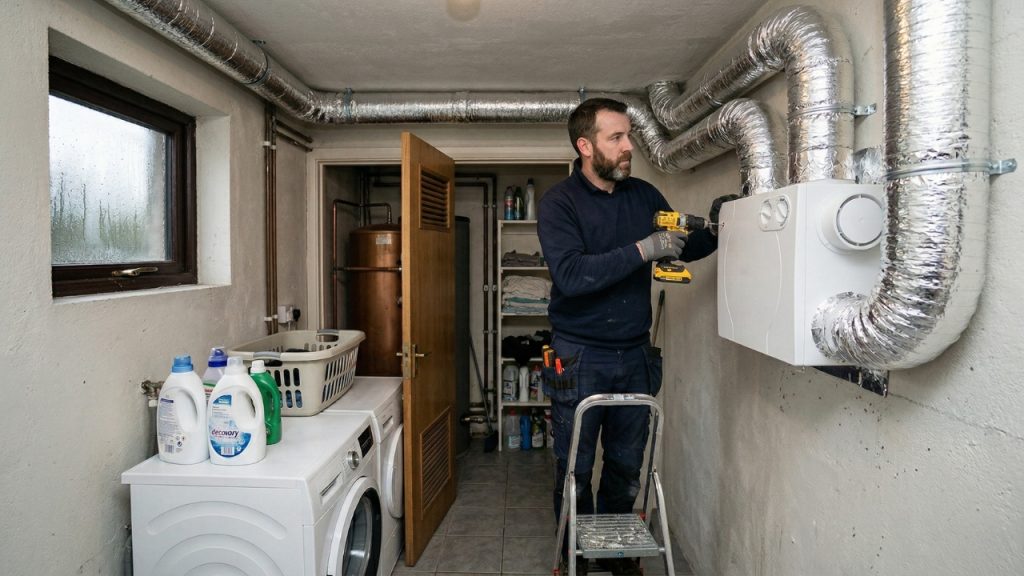
MVHR is the gold standard for whole-house ventilation in Ireland, particularly in newer or recently retrofitted homes. The system works by extracting stale air from wet rooms (kitchens, bathrooms, utility rooms) and supplying fresh filtered air to living areas and bedrooms. The clever part is the heat exchanger sitting at the centre of the system. As outgoing warm air passes through it, most of that heat transfers to the incoming fresh air. You get clean, warm air without opening a window.
When Does MVHR Make Most Sense?
MVHR performs best in homes with good airtightness levels. If your house has been insulated, draught-proofed or built to modern standards, it’s a strong candidate. Comparing MVHR against trickle vents shows the difference clearly: trickle vents rely on wind and temperature to move air, while MVHR works consistently regardless of weather conditions.
These systems are particularly suited to airtight new builds, passive house designs and homes that have recently undergone deep retrofits with external wall insulation. Brands like Zehnder ComfoAir and Vent Axia Kinetic are commonly installed in Irish homes.
The cost of installing a full MVHR system in a typical Irish home varies depending on property size and complexity. VentSolve offers a dedicated breakdown of MVHR costs in Ireland that covers unit prices, ductwork and installation charges. Our 2026 prices for an installed MVHR system are €5,500 to €6,000 for homes up to 100 m², €6,000 to €7,000 for 100 to 200 m², €7,000 to €8,000 for 200 to 300 m², and €8,000 to €9,500 above that. For the running side, see what MVHR adds to your electricity bill.
What About Extractor Fans and Simpler Options?
Not every home needs a full MVHR system. Older properties with natural ventilation through gaps and trickle vents may only need targeted extraction in problem rooms. Bathrooms, kitchens and utility rooms are the usual culprits.
There are several options depending on your setup:
- Axial fans suit bathrooms close to an external wall. They’re compact, quiet and push air over short distances.
- Centrifugal fans work for bathrooms further from an outside wall, where air needs to travel through longer duct runs.
- Inline fans sit within the ductwork itself, making them invisible inside the room. Ideal for en-suites or internal bathrooms without direct wall access.
- Humidistat fans activate automatically when humidity rises above a set level, which means they run only when needed.
- Single room heat recovery units offer a compact, wall-mounted alternative for individual rooms with persistent damp problems.
Choosing the right extractor fan is about matching the fan type to your room layout and moisture levels. A bathroom that already struggles with mould may benefit from a humidistat-controlled centrifugal fan paired with improved heating, rather than a basic timer model. Our guide to bathroom ventilation systems compares these options for the bathroom.
Quick Comparison: System Types at a Glance
- MVHR: Whole house; recovers most of the heat; best for passive house and airtight new builds.
- Single Room HRV: Room-by-room; no ductwork required; suits older homes or targeted damp problems.
- Bathroom Extractor Fans: Minimum requirement; essential but not a substitute for whole house ventilation (see MVHR versus traditional extractor fans).
- PIV Units: Positive input ventilation; low cost; pushes fresh air in from attic; better suited to homes without a condensation crisis (see MVHR versus PIV).
Can Natural Ventilation Still Work in Irish Homes?
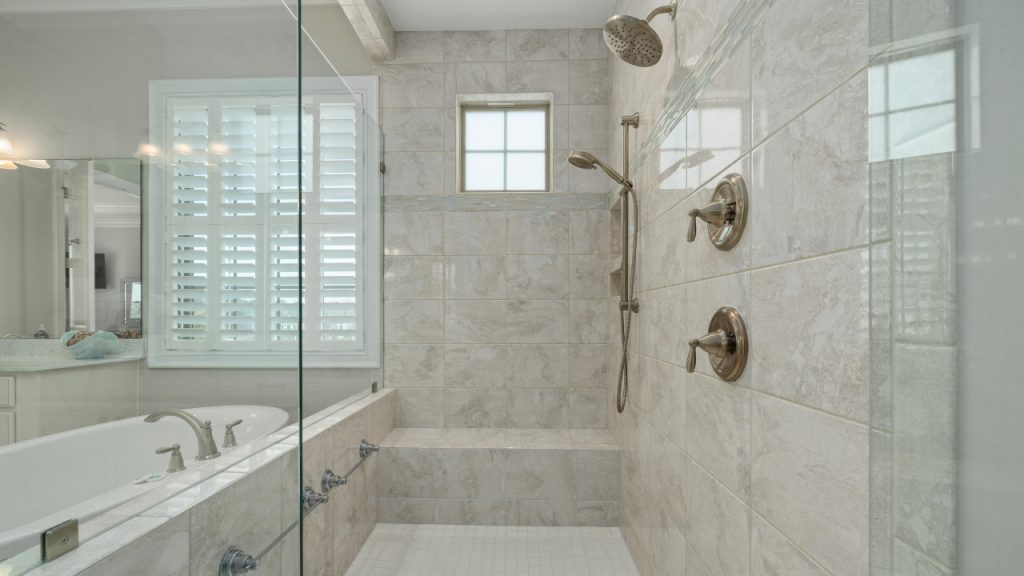
It depends on the house. Older Irish homes built before the 1990s were rarely airtight. Gaps around windows, doors and floorboards meant air moved through the building constantly. That uncontrolled airflow was draughty and inefficient, but it did prevent most condensation problems.
If your home still has a lot of natural air movement and you’re not planning to insulate or draught-proof any time soon, opening windows for 15 to 20 minutes a day and running extractor fans in wet rooms may be enough to keep moisture under control.
But the moment you add insulation, replace windows or seal up draughts, the game changes. Airtight homes need mechanical ventilation. There’s no way around it. Without controlled airflow, moisture builds up fast and mould follows within weeks.
How Do You Choose Between Ventilation Systems?
Start with your home’s airtightness level and current ventilation setup. A BER assessment will tell you a lot about where heat and air are escaping.
For a new build or a home that has been recently retrofitted to a B2 BER rating or better, MVHR is almost always the right call. It keeps an airtight home ventilated without throwing the heat away, and it is one of the ways new homes meet the ventilation requirements of Part F of the Building Regulations.
For older homes with moderate airtightness, a combination of demand-controlled extractor fans and a positive input ventilation (PIV) unit can work well. PIV systems gently push filtered air into the home from the attic space, creating slight positive pressure that dilutes moisture and reduces condensation. They’re simpler to install and less expensive than full MVHR. Another option for these homes is mechanical extract ventilation (MEV): one central unit that extracts continuously from the kitchen, bathrooms and utility room.
If the problem is limited to one or two rooms, single room heat recovery units or standalone extractor fans may be all you need. These are quick to install, cause minimal disruption and can make a noticeable difference within days.
Homeowners upgrading ventilation as part of a broader energy retrofit should also look at SEAI grant support. The SEAI home energy grants scheme may support ventilation as part of a wider energy upgrade. Grant amounts and conditions change, so check the current rules on seai.ie before you plan around a grant. Separately, VentSolve has its own offer: we credit €1,500 on any job over €10,000 (the VentSolve Grant).
Every Irish home has different ventilation needs, but the principle is the same: moisture needs a way out, and fresh air needs a way in. Whether that means a full MVHR system, a set of smart extractor fans or a single room unit, getting professional advice on your specific property is the fastest way to fix condensation and prevent mould from coming back.
If you’re dealing with persistent damp or planning an energy upgrade, send us photos of the problem rooms with your Eircode. We reply with the ventilation setup that suits your home and a free preliminary quote by email.
FAQs
Q1: What is the best ventilation system for Irish homes?
For most Irish homes, especially those with good insulation, MVHR (Mechanical Ventilation with Heat Recovery) is the most effective option. It continuously removes damp air and supplies filtered fresh air while retaining heat. Older or leakier homes may manage well with extractor fans and natural ventilation instead.
Q2: How much does it cost to install MVHR in Ireland?
Our 2026 prices for an installed MVHR system, including the unit, ductwork and installation: €5,500 to €6,000 for homes up to 100 m², €6,000 to €7,000 for 100 to 200 m², €7,000 to €8,000 for 200 to 300 m², and €8,000 to €9,500 above 300 m².
Q3: Do I need mechanical ventilation if my home is older?
It depends on how airtight your home is. If you’ve recently added insulation, replaced windows or sealed draughts, mechanical ventilation becomes important to prevent moisture buildup. Older homes that haven’t been upgraded may still rely on natural airflow, but targeted extractor fans are usually recommended for kitchens and bathrooms. Not sure your home needs more? Read how to know if your home needs a ventilation system.
Q4: Can I get a grant for installing ventilation in Ireland?
Possibly. SEAI grants can include ventilation as part of a wider energy upgrade, but the amounts and conditions change, so check the current rules on seai.ie. VentSolve can advise on eligibility and the application process.
Q5: What causes condensation in Irish homes?
Condensation forms when warm, moist indoor air meets cold surfaces like windows or uninsulated walls. Ireland’s high humidity, combined with daily activities like cooking and showering, means homes produce a lot of moisture. Without adequate ventilation, this moisture settles and creates damp conditions.
Q6: How long does an MVHR system last?
A well maintained MVHR system lasts for many years. Annual servicing keeps the filters clean and the system running efficiently, and the MVHR systems we install carry a 5 year warranty when serviced annually by VentSolve.