
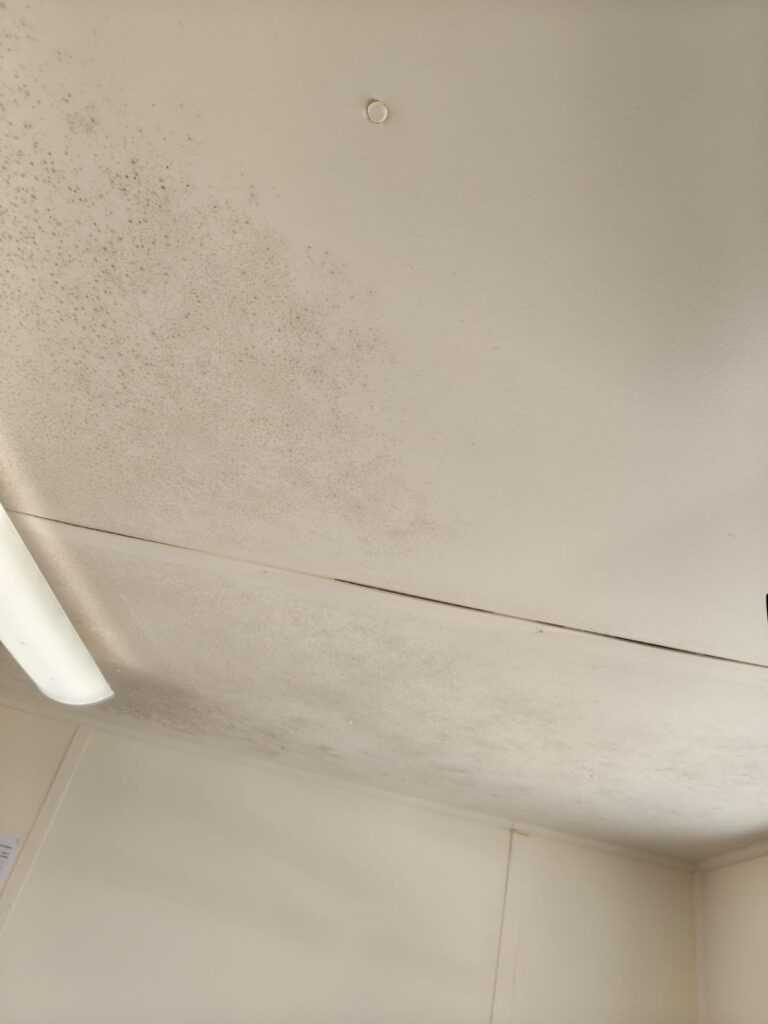
Black mould on bathroom ceiling paint comes back because the steam from every shower stays in the room long enough to soak the ceiling, and no paint wins against a surface that gets wet every morning. If the fan is missing, too weak, switched off too early, venting into the loft or blowing into a blocked duct, the warm wet air condenses on the ceiling, and fresh paint over that is spotted again within weeks. Anti-mould paint is a good last coat, not the fix. The order that works is the one our bathroom mould removal in Dublin follows on every job: find the moisture cause, treat the mould properly, fix the extraction, and only then paint.
Key takeaways
- Mould on a bathroom ceiling is a moisture problem first. The paint is where it shows, not where it starts.
- The usual cause is steam that is not leaving the room, for one of five fixable reasons.
- Anti-mould paint resists new growth on a clean, dry, treated surface. It does not kill growth already in the plaster or take water out of the air.
- The right order: find the cause, treat the mould, fix the extraction, then paint.
- A patch that keeps returning, spreads beyond the shower or sits under a bath upstairs needs more than paint.
Why does mould on bathroom ceiling paint keep coming back?
Because the conditions that grew it are still there after you paint. Warm, wet air from the shower rises to the ceiling, often the coldest surface it meets, especially under a cold loft or where the insulation above has gaps. If the steam leaves within minutes, the ceiling dries. If it hangs in the room, the paint stays damp for hours every day and mould grows into the paint film and the plaster behind it.
The pattern tells you a lot. Spots over the shower, or in the corner furthest from the fan, mean steam is not being pulled out. A strip along the outside wall means a cold edge where the insulation stops. A brown ring or a soft, bubbling patch under a bath, a tank or the roof means a leak, and no fan will fix that.
Five reasons the steam is not leaving
1. There is no fan, only a window
Plenty of bathrooms still rely on natural ventilation, and in an Irish winter nobody leaves the window wide open after a shower. Natural ventilation alone is rarely enough for a bathroom with a powerful shower.
2. The fan is too small or too tired
An old small fan on a long duct, or one with a clogged grille, can hum away without moving much air. Hold a sheet of toilet tissue against the grille while it runs: if the fan cannot hold it there, very little steam is leaving.
3. The fan stops too soon
A fan on the light switch stops when you leave the room, which is exactly when the room is wettest. An overrun timer keeps it running after the light goes off, and a humidity sensing fan runs until the air is dry. Technical Guidance Document F, the ventilation part of the Building Regulations, asks for an overrun on extract fans in bathrooms with no openable window.
4. The duct ends in the loft
A fan can run perfectly and still send the steam nowhere. If the duct stops in the roof space, the wet air condenses on the cold timbers, and water in a bare duct can run back and drip through the ceiling you are trying to keep dry. We fitted a roof vent for exactly this reason on a bathroom fan venting into the loft in Malahide.
5. The duct or the outside cover is blocked
Fluff builds up in the grille and the duct, flexible duct sags or gets crushed under boxes in the loft, a backdraught flap sticks shut, or the cover on the outside wall breaks or fills with debris. If the fan sounds busy but the mirror stays fogged, check the route before you blame the fan.
What anti-mould paint can and cannot do
Anti-mould paint is a paint with a fungicide in it that slows new growth on its surface. On a ceiling that has been treated, dried and kept dry by working extraction, it is the right final coat. It cannot kill growth already in the plaster beneath it, stop the ceiling getting soaked, or make up for a fan that does not extract. The US Environmental Protection Agency’s mould cleanup guidance says not to paint over mouldy surfaces: clean and dry them first, because paint applied over mould is likely to peel.
For choosing the product, see our guide to the best anti-mould paint in Ireland; for preparing the surface, our post on whether you can paint over mould. The point here is simpler: paint is step four.
The right order: four steps
Step 1: find where the moisture comes from
Read the pattern, test the fan, follow the duct in the loft and think about what sits above the ceiling. A slow leak from a bath, a tank or the roof can look like steam mould at first, and painting a ceiling that is wetted from above wastes the work.
Step 2: treat the mould properly
Scrape back flaking or bubbling paint, treat the growth with a fungicidal product that works into the surface rather than bleaching the colour out of it, and let the ceiling dry fully. Bleach is mostly water: on plaster it lightens the stain and leaves the growth behind. Our post on professional mould cleaning versus a shop spray explains when a spray is enough.
Step 3: fix the extraction
Put the extract point where the steam collects, usually in the ceiling over or near the shower, not above the door. Match the fan to the room and the duct, give it an overrun timer or a humidity sensor, and make sure the duct is sealed, supported and ends outside, with a gap under the door to let air in. Our bathroom extractor fan installation page explains the fan types; our 2026 prices are €200 plus the fan to replace a fan in the same position, €450 to €550 for a new standard fan and €600 to €700 for an inline fan in the loft.
Step 4: paint last
Once the ceiling is dry and the fan has had a week or two of showers to prove itself, paint with a mould resistant ceiling paint. If spots appear on the bare, treated ceiling before then, you have found out cheaply that the moisture is not solved yet. We can also apply anti-mould paint as part of the job once the rest is done.
What this looks like on a real job
A modern Dublin bathroom we worked on recently looked great but relied on natural ventilation. Steam from the shower just hung in the room and was not being pulled out, so the moisture settled on the ceiling, the tiles and the silicone, which is how black grout, bubbling paint and mould start. A fresh coat of paint would have changed nothing. We removed the old setup and fitted a proper extractor fan with the extract point in the ceiling, where the steam collects, so the moist air is sent outside. The fan now pulls the steam out after every shower, the room dries quickly and the mirror clears.
In another Dublin home the mould had already taken hold on a bedroom ceiling and in the hot press. Our technician worked fully protected, looked for the source of the moisture first, then treated the affected surfaces properly rather than just wiping them, because bleach can lighten the colour but often leaves the growth behind. The result was clean, treated surfaces and a clear plan to stop the moisture that caused it. We follow the same order on every ceiling.
When to call us
If the spotting is small, on the surface and over the shower, and the fan is already fixed, you can clean and repaint it yourself. Bring us in when:
- the spots return within weeks of cleaning or painting;
- the patch is bigger than a few hand spans or has spread beyond the shower area;
- the paint is bubbling, the plaster feels soft or there is a brown stain, which can mean a leak from above;
- the fan runs but the mirror stays fogged and you cannot see why;
- someone in the home has a chest condition and should not be scrubbing mould overhead.
Our bathroom mould removal starts from €350 depending on size and scope, and we look at the extraction on the same visit, because treating a ceiling without fixing the steam only books the next treatment. We provide a 1-year warranty on our mould remediation work when the customer accepts and completes the full recommended quotation and scope of works. We work across Dublin and Leinster from our base in Dublin 15.
Frequently asked questions
Can I paint over mould on a bathroom ceiling?
No. Paint over live growth traps it under the new coat, and the spots usually show through within weeks, often with peeling. Scrape off flaking paint, treat the growth with a fungicidal product, let the ceiling dry fully and fix the extraction first. Then a mould resistant ceiling paint has a clean, dry surface to hold on to.
What is the best paint for a mouldy bathroom ceiling?
A mould resistant paint made for bathroom and kitchen ceilings, applied after the mould has been treated and the ceiling has dried. Our anti-mould paint guide compares the options. The paint matters less than what comes before it: on a ceiling soaked by steam every day, even the best tin loses.
Why does my bathroom ceiling get mould when I have a fan?
Usually the fan is not moving enough air out of the room. It may be too small for the shower, clogged with dust, switched off with the light, ducted into the loft, or pushing against a crushed duct or a blocked outside cover. Try the tissue test at the grille, then follow the duct in the loft.
How long should a bathroom fan run after a shower?
Until the steam has cleared and the mirror and ceiling are dry, usually well after you have left the room, so a fan on the light switch alone stops too early. An overrun timer keeps it going after the light goes off, and a humidity sensing fan runs until the air is dry, so nobody has to remember.
How much does it cost to fix a mouldy bathroom ceiling?
Mould removal with us starts from €350 depending on size and scope. If the extraction needs work, replacing a fan in the same position is €200 plus the fan, a new standard fan is €450 to €550 and an inline fan in the loft is €600 to €700. We price treatment and extraction together from your photos and Eircode.
Send us a few photos of the ceiling and the fan with your Eircode and we will email a free preliminary quote within 24 hours, call (01) 685 6363, or use the form below.