
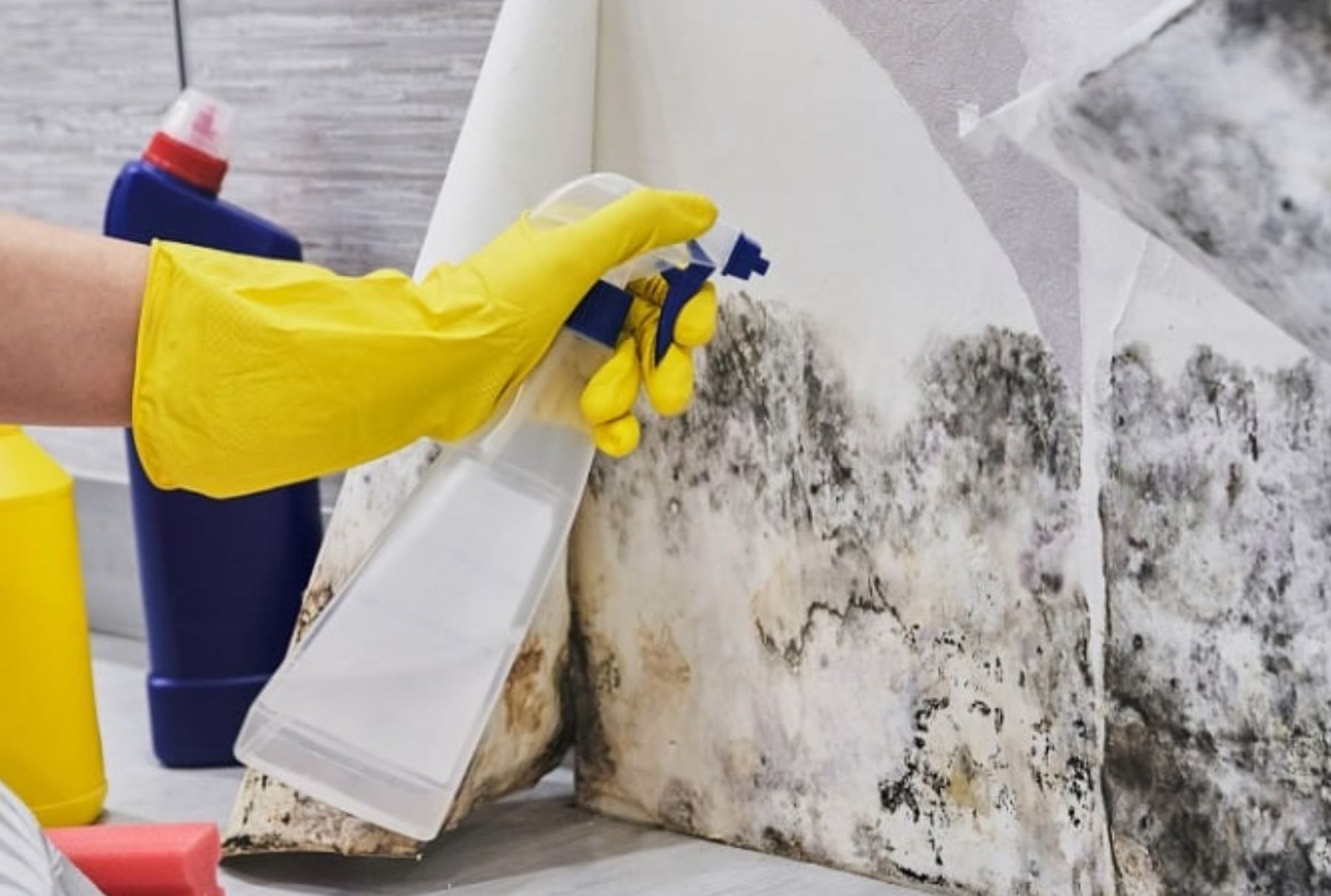
A shop bought mould spray does a real job, and it is a smaller job than the label suggests. On a hard, non porous surface such as tiles, sealant, glass or gloss paint, a fungicidal spray kills and lifts surface spotting and buys you weeks or months. On plaster, plasterboard, bare timber, wallpaper or a ceiling with growth in the paint, it bleaches the colour and leaves the roots, and the patch is back in a few weeks because the moisture that grew it is still there. Professional treatment is different in three ways: it reaches the growth in porous materials rather than the surface stain, it is done with the right protection in a way that does not spread spores through the house, and it comes with finding and fixing the moisture source. This guide is honest about both, because we would rather you spend a few euro on a spray when that is the right answer and call us when it is not.
Key takeaways
- Sprays work on surface mould on hard surfaces: shower tiles, grout, sealant, window frames, gloss woodwork. Clean, rinse, dry, and keep the room ventilated.
- Sprays do not work on mould in porous materials or on the cause. Bleaching a plaster wall white does not remove the growth below the surface, and nothing in a bottle fixes a dead extractor fan.
- Bleach is a poor mould treatment on porous surfaces: the water in it soaks in and feeds the growth while the chlorine stays on top.
- Professional treatment removes the growth from the affected materials, replaces what cannot be saved, protects the people in the home while it is done, and is paired with the ventilation fix that keeps it away.
- Our mould removal starts from €350 depending on size and scope, with a one year remediation warranty when the full quoted scope is done and the ventilation we recommend is in place.
When a spray is the right tool
Use a spray for small areas of black spotting on hard surfaces where the cause is obvious: the corner of a shower, the silicone around a bath, the bottom of a window frame that streams in winter, the grout behind a kitchen tap. Open the window, wear gloves, follow the label’s contact time, rinse, and dry the surface. Then deal with the cause: run the fan longer after showers, wipe the window sills in the morning, leave the bathroom door open to let it dry. Our shower mould guide goes through that room in detail, including when the sealant has to be replaced rather than cleaned.
When a spray makes it worse
- Plaster, plasterboard and ceilings. Growth sits in the paint and the plaster, not on it. A spray takes the colour out of the surface; the mould regrows from below and now you cannot see how far it has spread.
- Wallpaper and the paste behind it. The paste is food; the spray does not reach it.
- Bare timber, MDF and chipboard. Porous, and the moisture that caused the growth is still inside the material.
- Anywhere the patch is bigger than a few hand spans, or in more than one room. That is not surface spotting; that is a home with a moisture problem.
- Anywhere someone with asthma or a chest condition lives. Scrubbing dry mould throws spores into the air of the room you are standing in.
Why bleach is the wrong answer on walls
Bleach is mostly water. On a porous wall the water soaks in and feeds the growth while the chlorine stays at the surface and whitens the stain, so the wall looks clean for a few weeks and then blooms again, often darker. On tiles and glass bleach based products are fine; on plaster, timber and board they are the most common reason we are called to a wall that “has been cleaned five times”.
What professional treatment does differently
On a mould treatment in Dublin the affected surfaces are treated with professional fungicidal products that work into porous materials, the growth is physically removed rather than bleached, materials that cannot be saved such as soaked plasterboard or underlay are cut out and replaced, and the room is contained and the technician protected so spores are not spread through the house. Before we start we find the moisture source: condensation, a leak, rising damp or ventilation that does not extract. After we finish you get the readings and a plan for the ventilation, because the treatment holds only if the wall stays dry. That is why the mould removal we quote carries a one year remediation warranty: we are confident in the work when the cause has been fixed with it. Caroline Little’s public Google review describes a typical job: “They booked them in straight away and the job was done in a day. Very professional and would recommend.”
A simple test before you buy anything
Press the back of your hand to the wall around the mould and to a dry wall in the same room. If the mouldy area feels colder or damp, or if the patch is in a top corner of an outside wall, behind furniture, or around a window that streams, the problem is condensation on a cold surface and a spray will not end it. If the patch is below a window, a roof line or a bathroom above, it may be a leak. In either case the fix is a fan, a vent, insulation of the cold spot or a repair, and the cleaning is the smaller half of the work. When you cannot tell, a mould survey measures it. We cover Dublin and Leinster; the south county housing stock is described on our mould removal in Dalkey page.
What it costs, honestly
A spray costs a few euro and an hour of your Saturday, and for surface spotting on tiles that is the right spend. Professional mould removal with us starts from €350 depending on the size and scope of the job, more for several rooms or where plasterboard has to be replaced, and we quote from your photographs and Eircode by email within 24 hours. The expensive outcome is the third one: years of sprays on a wall that needed a fan, then a bigger treatment later.
Frequently asked questions
Can I remove black mould myself?
Small patches on hard surfaces such as tiles, sealant and window frames, yes, with a fungicidal spray, gloves and an open window. Mould on plaster, plasterboard, ceilings, timber or across more than one room needs professional treatment and a fix for the moisture source.
Is bleach or vinegar better for killing mould?
Neither is a treatment for porous walls. On tiles and glass a proper fungicidal product does the job; on plaster the water in bleach feeds the growth and the stain comes back.
What should you not clean mould with?
Dry brushing or a vacuum without a filter, which spreads spores; bleach on porous walls; and painting over it, which hides growth that keeps spreading underneath.
What permanently gets rid of mould?
Removing the growth properly and then keeping the surface dry: working extraction in bathrooms and kitchens, background ventilation, heat in the cold rooms, and repairs where water is getting in.
How much does professional mould cleaning cost?
Our mould removal starts from €350 depending on size and scope. Send photographs and your Eircode and we email a free preliminary quote within 24 hours.
Send us a few photos with your Eircode and we will email a free preliminary quote within 24 hours, or call (01) 685 6363.