
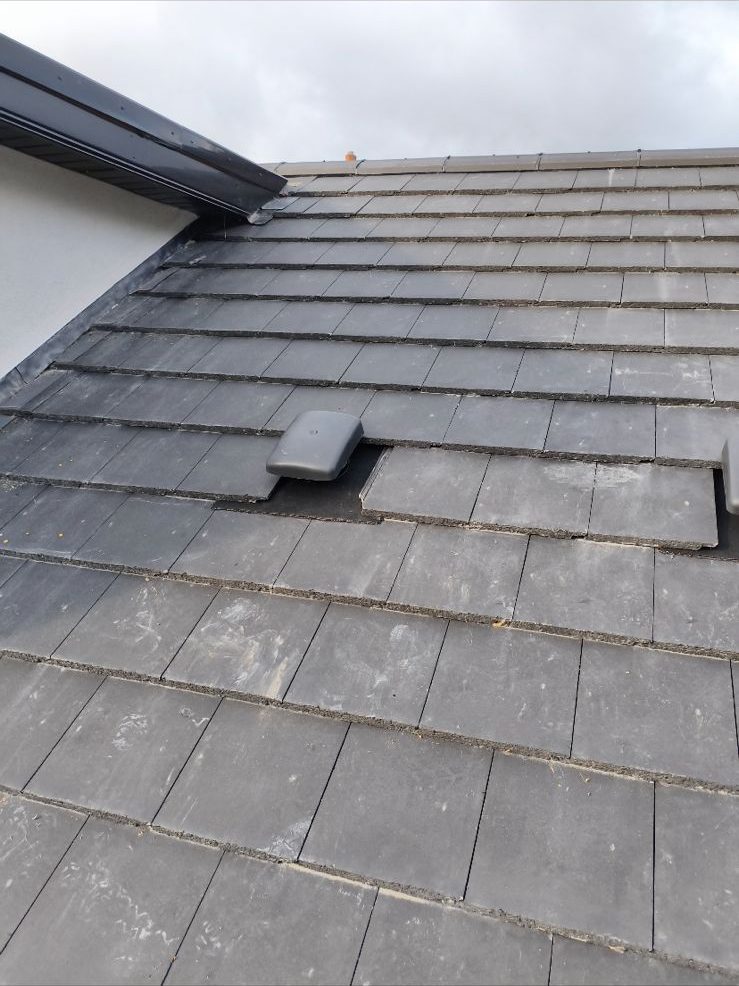
Most ventilation problems start where nobody looks. Recently our team was in a loft in Malahide fitting a new roof vent for a homeowner who wanted the extracted air to leave the house properly, not sit in the roof space. A fan that vents into the loft is the most common fault we find in Dublin homes, and one of the cheapest to put right.
Key takeaways
- Every bathroom and kitchen fan pushes warm, moist air into a duct. If that duct ends in the loft, the moisture condenses on cold timber and roofing felt. One Irish winter is enough for damp rafters, black spots and a smell that drifts into the bedrooms.
- The fix is a proper exit: a roof vent or a wall terminal, with the duct supported above the insulation, run as short and straight as possible, and sealed so rain stays out and moist air goes out.
- The outside end matters as much as the inside. A cracked or missing external cover lets wind push air back down the duct, so the fan runs but nothing leaves. The rust streaks under a vent on a rendered wall are a sign it has been letting water in for years.
- If your fan runs but the mirror stays fogged, check the route before you blame the fan.
What we found in the Malahide loft
The fan below was working. Its duct ran up into the loft and the extracted air was being left in the roof space rather than taken outside, which is exactly what the homeowner wanted changed. It is the most common fault we find on this type of job, and the quiet way roof timbers get damp: out of sight, from a fan that is doing exactly what it was asked to do.
What a roof vent job involves
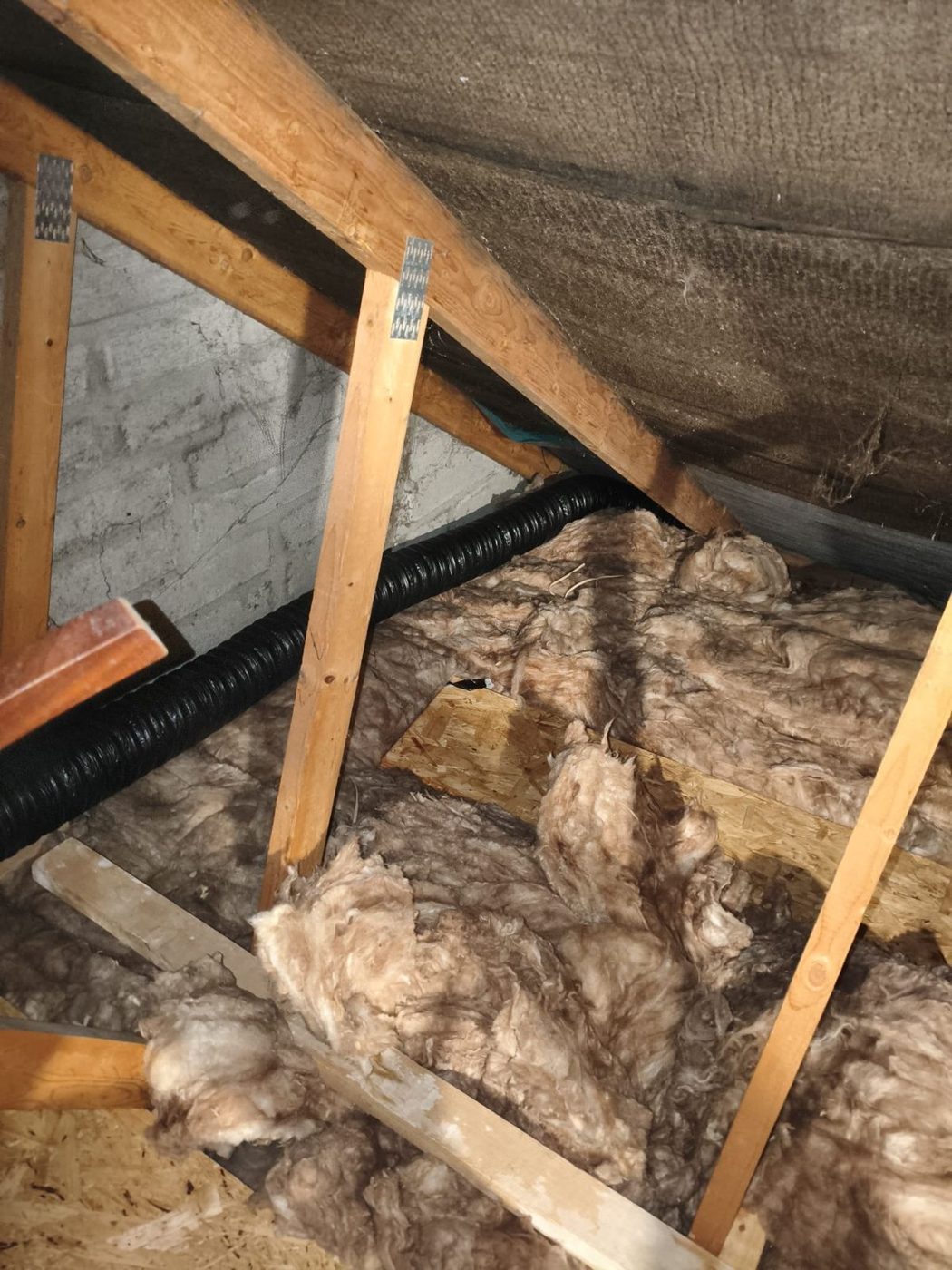
The work is straightforward and takes a morning. We fit a roof vent tile or terminal in the right place for the duct route, run the ducting from the fan to it, keep the duct supported above the insulation so it does not sag and collect water, use insulated duct through the cold loft so the warm air does not condense inside it on the way out, and seal the terminal against the weather. Where the fan itself is tired or undersized, we say so, but on this job the fan was fine; it only needed somewhere to send the air. Our roof ventilation page describes the terminals we use.
The outside end: a vent cover is the last line of defence
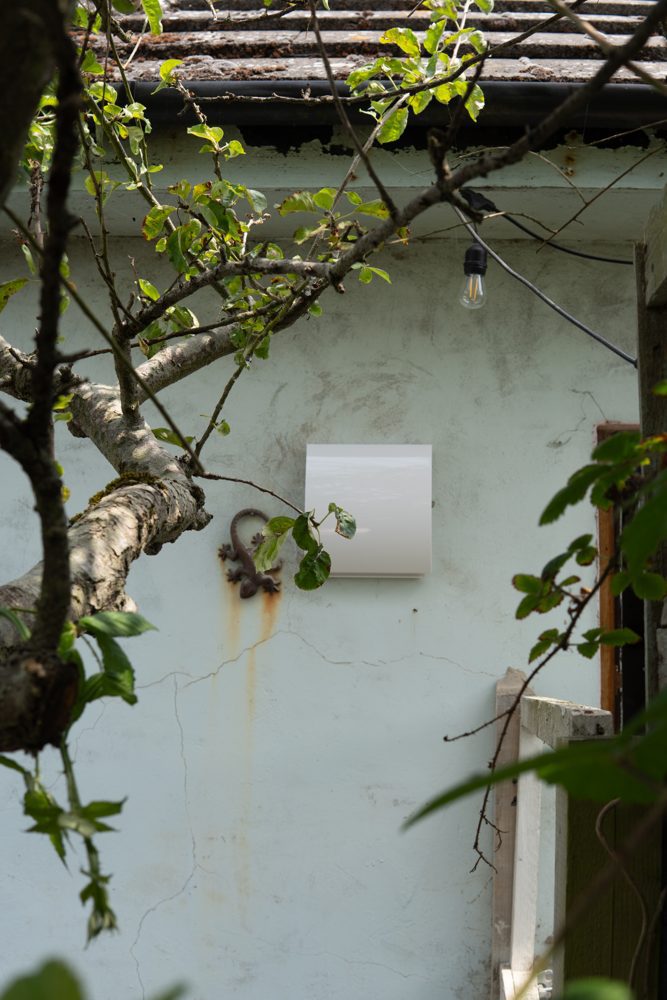
On another Dublin home recently the problem was at the other end. The duct went outside properly, but the external cover on the rendered wall had broken away. Rain, wind, birds and insects had a clear way in, and wind blowing straight into the open duct was pushing air back into the bathroom. You could read the history on the wall: rust streaks where water had been running down for years. A new cowl with angled louvres lets the moist air out, keeps the weather out and protects the duct behind it. It is a small job that changes how the whole fan performs.
A check you can do today
Walk around the outside of your house and look at every vent outlet: cracked, missing or blocked covers are worth fixing before winter. Then go into the loft with a torch and follow each duct from the ceiling to where it ends. If any of them stop in the roof space, that is the job. If the loft itself feels damp or the felt shows black spots, our attic ventilation page explains what else may be going on, and our guide on how to ventilate your attic covers the eaves and ridge side of it.
When the fan is the problem too
Sometimes we fix the route and the bathroom still clears slowly, because the fan behind it is an old axial unit on a long duct. Which fan suits which bathroom, and how to size it, is in our bathroom extractor fan buying guide; what a replacement involves and costs is on the bathroom extractor fan installation page.
Frequently asked questions
Can a bathroom extractor fan vent into the loft?
No. It must terminate outside through a roof vent, soffit vent or wall terminal. A duct that ends in the loft moves the moisture from the bathroom onto the roof timbers.
What happens if an extractor fan vents into the attic?
The warm wet air condenses on cold timber and felt. Over a winter or two that means damp rafters, mould on the felt and insulation, and a musty smell in the rooms below.
Do I need insulated ducting in the loft?
Yes where the duct crosses a cold loft. Bare duct cools the air inside it, moisture condenses and can run back towards the fan or drip through the ceiling.
How do I know where my fan vents to?
Follow the duct in the loft with a torch, or look outside for a vent cover roughly in line with the bathroom. If you cannot find an outlet, it is probably ending in the roof space.
If your fan runs but the bathroom still fogs up, send us a photo of the loft or the outside wall with your Eircode and we will email a free preliminary quote within 24 hours, or call (01) 685 6363. Malahide, Portmarnock, Swords, Donabate and the rest of north county Dublin are minutes from our Dublin 15 base.