
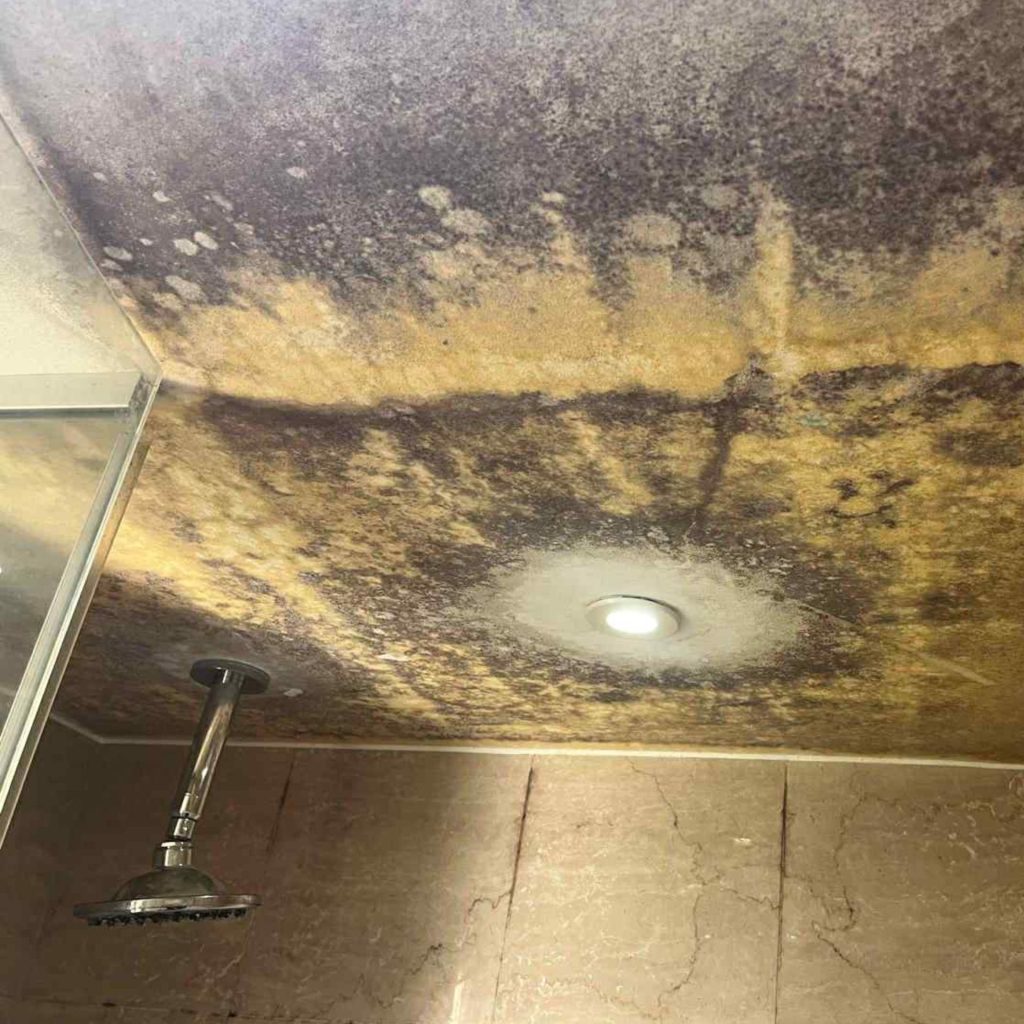
Mould after a leak is a race against the clock, and the clock runs faster than most people think. The US Environmental Protection Agency’s cleanup guidance puts it plainly: mould can start to grow on wet materials within 24 to 48 hours. A burst pipe, an overflowing bath, a washing machine hose, a blocked gutter sending water down an inside wall, or a flooded ground floor all leave plaster, timber, carpet and insulation wet, and anything that stays wet for more than a couple of days becomes a place for mould to grow. The good news is that the first three days decide almost everything. Stop the water, get the materials dry, throw out what cannot be dried, and the mould problem mostly never starts. This is the order we tell every customer who rings us the morning after.
Key takeaways
- Hour one: stop the water, make the electrics safe, photograph everything before you move it.
- Day one: remove standing water, lift wet carpet and underlay, open the structure so air can reach it, and start moving air and warmth through the rooms.
- Days two and three: keep drying, check with a moisture meter rather than by touch, and watch for the first spotting or a musty smell.
- Porous materials that were soaked, such as carpet underlay, plasterboard that has wicked water, chipboard and soft furnishings, usually cannot be saved; hard surfaces and solid timber usually can.
- Plaster and masonry take far longer than they look: a surface can feel dry while the wall behind it is still wet for weeks. Redecorating over a damp wall is how a leak becomes a mould job.
- If mould has already appeared, or the water was dirty, or anyone in the home has a chest condition, bring us in for a survey and treatment rather than scrubbing it yourself.
Hour one: stop, isolate, record
Turn off the water at the stopcock for a plumbing leak, and the electricity at the board for any room where water reached sockets, light fittings or appliances. Do not walk into standing water with the power on. Then photograph and video everything as it is: the source, the water level, the damaged contents, the ceilings and walls. Insurers and landlords will ask, and memory fades. Our post on whether home insurance in Ireland covers mould and damp damage explains why a sudden leak and the mould that follows are treated differently by most policies; read your own policy and ring the insurer early.
Day one: get the water out and the air in
- Mop, wet vacuum or pump out standing water. The sooner the surfaces are merely damp rather than wet, the better.
- Lift carpets and underlay from wet areas and get them outside or into a garage. Wet underlay is a sponge that never dries in place.
- Move furniture off wet floors; put foil or blocks under the legs of anything that stays.
- Open kitchen kickboards, the bath panel, the back of fitted wardrobes on the affected wall, and any ceiling that is sagging or dripping (carefully, with a bucket ready) so the hidden cavities can dry.
- Get the air moving and warm. Open windows when it is dry outside, run the heating steadily, point fans across the wet surfaces, and run a dehumidifier in a closed room if you have one. Warm moving air carries moisture away; a cold closed room keeps it.
- Empty the dehumidifier often in the first days; the amount it collects tells you how much water is still coming out of the building.
Days two and three: dry by measurement, not by feel
Surfaces dry first and fool you. A plastered wall, a concrete floor or a timber joist can feel dry to the hand and still hold water that keeps feeding growth behind the skirting or under the floor. A simple pin moisture meter costs little and tells you the truth; compare the wet area with a dry wall in the same room. Keep the air moving until the readings match. Expect a hard floor and bare blockwork to take days, soaked plaster and timber to take weeks, and a flooded solid floor with insulation underneath to take longer still. Watch for the first grey or black spotting, a musty smell, or paint and wallpaper lifting; any of those means the drying is losing the race in that spot.
What can be saved and what cannot
| Material | After a clean water leak | After dirty or flood water |
|---|---|---|
| Tiles, sealed concrete, solid timber | Clean, dry and keep | Clean and disinfect, dry and keep |
| Painted plaster on masonry | Dry thoroughly, often keep; repaint only when the meter says dry | Usually keep once dry and cleaned |
| Plasterboard that wicked water up the wall | Cut out the wet band above the tide mark | Cut out and replace |
| Carpet | Can sometimes be dried and cleaned professionally | Discard |
| Carpet underlay, chipboard flooring, MDF skirting | Usually discard | Discard |
| Insulation in floors or walls that got wet | Usually replace | Replace |
| Mattresses, upholstered furniture that soaked through | Rarely saved | Discard |
Throwing out a soaked underlay in week one is far cheaper than treating the mould that grows under a dried carpet in week four.
When mould has already appeared
If spotting has started, the drying was late or the leak went unnoticed behind a wall. A small area on a hard surface can be cleaned with a fungicidal product, gloves and an open window. Growth on plasterboard, inside cavities, across more than one room, or anywhere the water was contaminated needs professional mould removal: the affected surfaces are treated properly, the materials that cannot be saved are removed, and the moisture readings confirm the structure is dry before anything is closed up or redecorated. Our mould removal starts from €350 depending on size and scope and carries a one year remediation warranty when the full quoted scope is done and the ventilation we recommend is in place. We work across Dublin and Leinster; the mould removal in Meath page covers the county work.
When to survey rather than scrub
A mould survey is the right first step when you cannot find the source, when the leak was behind a finish and you do not know how far the water travelled, when a landlord or insurer needs the extent in writing, or when someone in the home has asthma or another chest condition. Air sampling against an outdoor reference, described on our mould testing page, shows whether spores are in the air at a level above outdoors even where nothing is visible yet.
Stopping the second mould problem
Leaks cause the first problem; the ventilation causes the second. Once a home has been through a flood or a serious leak, the materials carry more moisture than before for months, and a bathroom with a weak fan or a bedroom that is never aired turns that into condensation mould. When we treat a post leak job we check the extraction at the same time, because a humidity sensing fan or a vent in the right place is what keeps the walls dry after we leave.
Frequently asked questions
How quickly does mould grow after a leak?
The US Environmental Protection Agency’s guidance says growth can begin on wet materials within 24 to 48 hours, which is why the first three days matter most.
Can black mould be fully removed after a flood?
Yes when the growth is treated properly, the materials that cannot be dried are removed, and the structure is dried and kept dry. Mould returns when a wet wall is closed up or when the ventilation is left as it was.
Can a house be saved from black mould?
Almost always. Hard surfaces, masonry and solid timber are cleaned, treated and dried; soaked porous materials are replaced; the source and the ventilation are fixed.
How do I get rid of mould permanently after a leak?
Fix the leak, dry the structure by the meter not by touch, remove what cannot be dried, treat what remains, and make sure the room has working extraction so condensation does not take over where the leak left off.
Should I redecorate straight away?
No. Paint over damp plaster peels and hides growth. Repaint only when the moisture readings match a dry wall in the same room.
Send us a few photos with your Eircode and we will email a free preliminary quote within 24 hours, or call (01) 685 6363.