
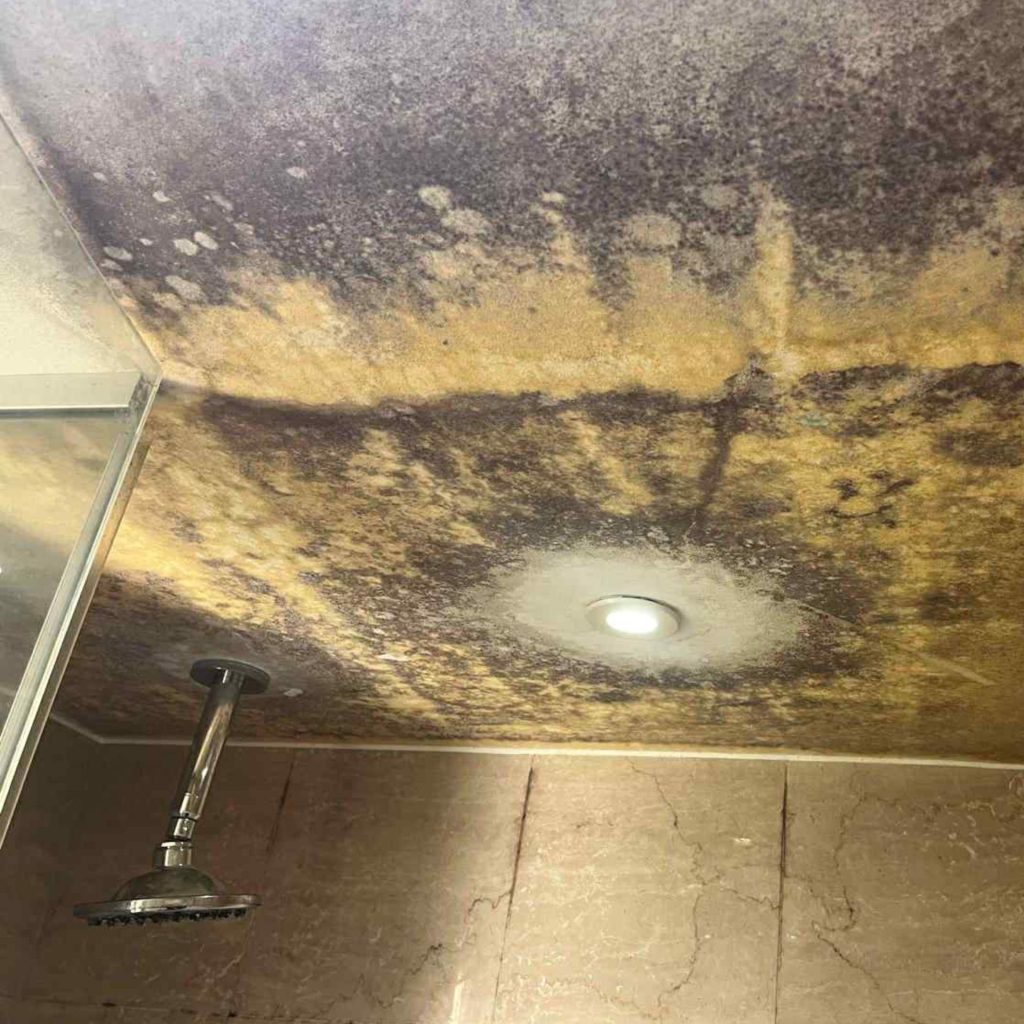
Mould and damp are two of the most common reasons Irish homeowners, landlords and property managers reach for their home insurance policy, and two of the most common reasons a claim gets turned down. The short version is that insurers treat mould very differently depending on what caused it. Here is when a claim stands a chance, when it does not, and what to do either way. This is general guidance from what we see on jobs; your own policy schedule is the only document that decides a claim.
Key takeaways
- Home insurance in Ireland almost never pays to remove mould caused by condensation, poor ventilation or ongoing damp, because insurers class these as gradual damage and a maintenance issue.
- A claim can succeed when mould results directly from a sudden, insured event such as a burst pipe, a storm-damaged roof or a flood, and you report it quickly.
- Most policies use the wording “sudden and accidental” as the test. If the damage built up slowly over months, that phrase is usually why the claim is refused.
- Fixing the cause matters more than the payout. VentSolve gives a one-year warranty on mould remediation when the full recommended scope of work is completed: if mould returns within 12 months, a VentSolve surveyor revisits and assesses it, and if the cause lies in our workmanship or the solution we provided, we carry out the remedial work at our own cost.
Does home insurance in Ireland cover mould damage?
In most cases, no. Standard home insurance in Ireland does not cover mould or damp that develops slowly from condensation, humidity or lack of ventilation. Insurers see that kind of mould as wear and tear or a maintenance problem, and nearly every policy excludes it in the small print.
The picture changes when mould is the direct result of something sudden and insured. If a pipe bursts behind a wall and the resulting damp brings on mould within a short window, the water damage, and sometimes the mould that follows, can fall under your policy. The deciding factor is the cause, not the mould itself.
So before you ring your insurer, work out one thing: did the damp appear suddenly from a specific event, or did it creep in over weeks and months? That answer usually predicts the outcome.
When would home insurance actually pay out for damp or mould?
A claim has a real chance when the mould traces back to a covered peril that happened suddenly. These are the situations most likely to be accepted:
- Escape of water, such as a burst or leaking pipe, an overflowing tank or a failed washing machine hose that soaked a wall or floor.
- Storm damage that let rain in, for example slates blown off the roof or a cracked flashing after high winds.
- Flooding, where your policy includes flood cover and the water came in during a defined event.
- Accidental damage, if you hold that optional add-on and something like a nail through a pipe caused a hidden leak.
In each case the water intrusion is the insured event and the mould is treated as consequential damage. You improve your odds by reporting the incident straight away, taking dated photographs, and not stripping anything out before the insurer or loss assessor has seen it. Even here, cover is not guaranteed. Many policies pay to repair the source and dry out the structure but cap or exclude the mould clean-up itself. Read the section headed “exclusions” and look for any mention of fungus, spores or mould.
Why do insurers refuse most mould and damp claims?
Because the damage is gradual, and gradual damage sits outside almost every home policy in Ireland. The standard test is whether the damage was “sudden and accidental”. Condensation on a cold bedroom wall that turns black over a winter fails that test on both counts: it was neither sudden nor accidental. The other common refusals come down to these points:
- Lack of maintenance. If a gutter was blocked for a year or a known leak went unfixed, the insurer argues you should have dealt with it.
- Poor ventilation. Black mould in a bathroom or around windows is usually blamed on humidity and airflow, which the homeowner is expected to manage.
- Pre-existing condition. If the damp was there before the policy started, it is not covered.
- Undetermined cause. If nobody can prove a single sudden event caused the mould, the claim tends to be declined.
This is where a professional mould survey can change the conversation. A written report that identifies a burst pipe or a specific water ingress point, with moisture readings and photographs, gives you evidence an insurer takes seriously. Without that, “there is mould on the wall” is easy to dismiss.
A written survey also settles what to do next, insurer or not. One customer wrote in a Google review that our team “conducted a mould survey report” in his house, after which he chose a bathroom fan installation and remedial work on the existing mould, and that “the quality of air in my house has improved greatly”. The report told him the cause was ventilation, not a leak, which is the single most useful thing to know before you ring an insurer.
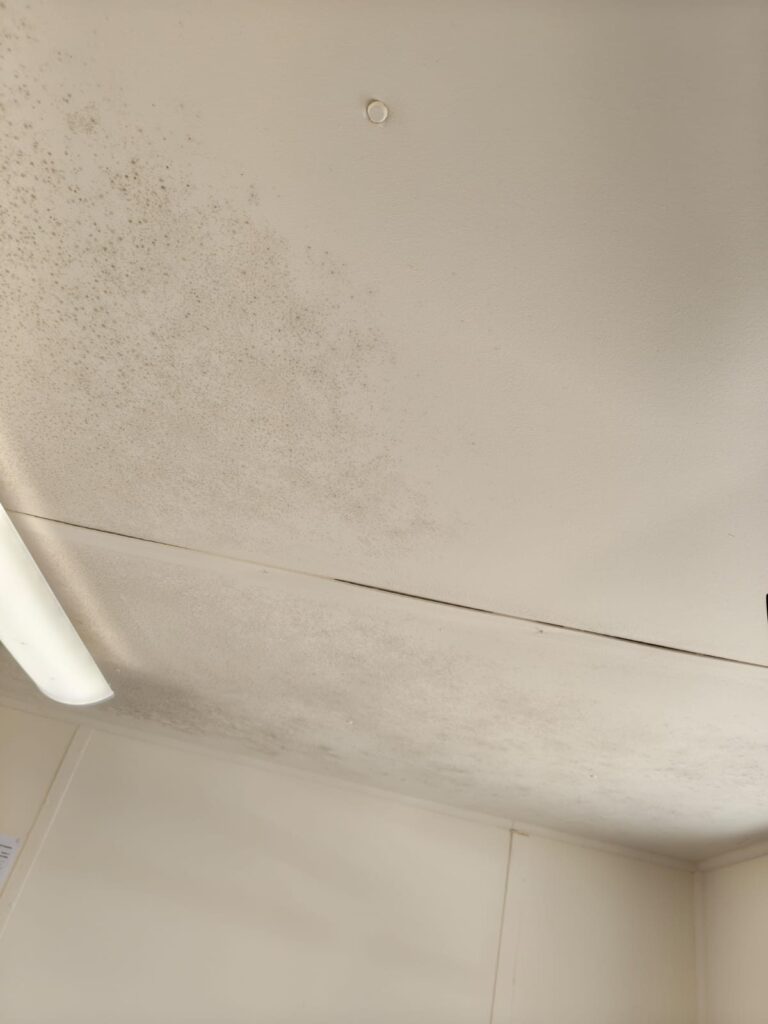
What is covered versus what is not: a quick reference
| Situation | Likely covered? | Why |
|---|---|---|
| Mould after a burst pipe reported promptly | Often yes | Sudden, accidental, insured peril |
| Mould after a storm-damaged roof let rain in | Often yes | Storm is a named peril |
| Mould from a covered flood event | Sometimes | Depends on flood cover in your policy |
| Black mould from bathroom condensation | Almost never | Gradual, linked to ventilation |
| Damp on walls from rising or penetrating damp | Almost never | Treated as maintenance |
| Mould from a leak you knew about and left | No | Lack of maintenance |
| Mould present before the policy began | No | Pre-existing condition |
Use this as a guide, not a ruling. Every policy is worded differently, and the only document that decides your claim is your own policy schedule.
How do you strengthen a mould or damp insurance claim?
If you think your situation is genuinely a sudden-event claim, act fast and document everything. The homeowners and landlords who get paid tend to do the same handful of things:
- Report the event immediately. Delay is one of the easiest reasons an insurer has to reduce or reject a payout.
- Photograph and date everything before you clean or repair, including the source of the water and the affected area.
- Get a professional cause diagnosis. A mould survey that names the cause is evidence; a photo of a black wall is not.
- Keep every receipt for emergency drying, temporary repairs or a plumber called out to stop a leak. These often count toward the claim.
- Do not throw out damaged items until the assessor has recorded them.
Once the claim is settled or refused, the mould still needs to go, and the cause still needs fixing, or it comes straight back.
What happens when insurance will not pay for the mould?
When the claim is refused, and for most condensation-driven mould it will be, you are paying out of pocket, so the smart move is to fix the cause once rather than treat the symptom every year. Repainting over black mould with ordinary paint buys you a few months at best; the spores are still in the wall and the humidity is still in the room.
Proper mould removal treats the affected surfaces, addresses the moisture source and improves airflow so the conditions that grew the mould no longer exist. For a bathroom that steams up daily, that can mean a humidity-controlled extractor fan. For a whole house with condensation on the windows every morning, it usually points to a ventilation upgrade such as heat recovery ventilation, which brings in fresh air without throwing away your heat.
Two things matter when you compare the cost of removal against the cost of leaving it. First, mould is a genuine health issue: the health hazards of mould include respiratory irritation and are hardest on children, older people and anyone with asthma. Second, the price of removal is far lower than the repeated redecorating and the damage to plaster and skirting that untreated damp causes over the years. You can see typical figures in our guide to how much it costs to remove mould in Ireland.
VentSolve treats the mould and the cause together, gives a one-year warranty on mould remediation when the full recommended scope is completed, and a five-year warranty on MVHR units that VentSolve services every year. To book a survey or ask a question, use the contact page or call (01) 685 6363.
Frequently asked questions
Does home insurance in Ireland cover black mould in a bathroom?
Almost never. Black mould in a bathroom is caused by condensation and humidity, which insurers class as a maintenance issue rather than a sudden accidental event. You would be expected to manage it with proper ventilation, so the clean-up and repair usually fall to you rather than the policy.
Will my insurance pay for mould after a burst pipe?
It often will, if you report it quickly. A burst pipe is a sudden, accidental event and counts as an insured peril on most Irish home policies. The water damage is generally covered, and mould that develops as a direct result may be included, though some policies cap or exclude the mould clean-up specifically. Check the exclusions section of your policy schedule.
Why did my insurer reject my damp claim?
The most common reasons are that the damage was gradual rather than sudden, that it was linked to poor ventilation or lack of maintenance, or that the damp was already present before your cover started. Irish home policies use a “sudden and accidental” test, and damp that built up over months fails it. A survey identifying a specific sudden cause can sometimes support an appeal.
What should property managers do about recurring damp in a rental?
Get the cause diagnosed with a survey rather than repeatedly repainting, because recurring damp points to a structural or ventilation problem that insurance will not cover. Fixing ventilation once protects tenant health, reduces complaints, and prevents the plaster and paintwork damage that costs far more over time than the original repair.