
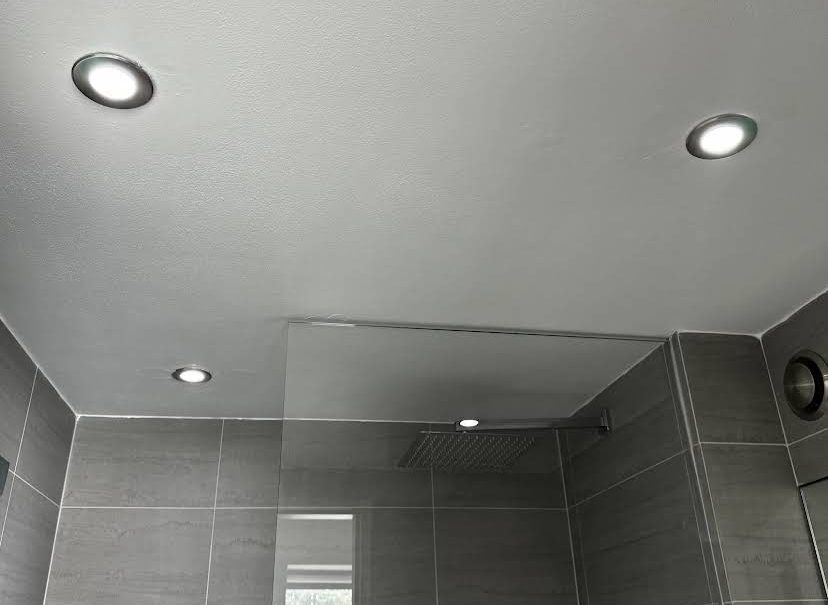
Grey tiles, a walk in shower, recessed lights: a lovely modern bathroom in Dublin, and if you look up into the corner you will spot the only piece of it that will decide whether it still looks like this in two years. The round extract valve, placed to pull the steam out before it settles on the ceiling and the tiles. We see a lot of expensive renovations where ventilation was an afterthought: a cheap fan in the wrong place, a duct that ends in the loft, or no extraction over the shower at all. Six months later the silicone goes black, the ceiling paint bubbles and the grout starts to stain. This post is the checklist we wish every homeowner and builder had before the first tile went on.
Key takeaways
- Put the extraction where the steam is made: over or beside the shower, high up, away from the door, so the air sweeps across the room on its way out.
- For a renovation with a loft or ceiling void above, an inline fan is the best option: the motor sits out of the room, the bathroom shows only a flat valve, it is quieter and it moves more air. Our 2026 installed price for an inline fan is €600 to €700.
- Insulated ducting through a cold loft is not a detail. Bare duct cools the warm air, the moisture condenses inside it and water runs back towards the fan or drips through the new ceiling.
- Humidity sensing or an overrun timer, so the fan runs when it should without anyone thinking about it.
- Decide all of this at the planning stage. Cutting a duct route after the ceiling is plastered and the tiles are on costs more and looks worse.
The five decisions, in order
1. Where the steam is made
The shower and the bath. The extract point goes above or next to them, not above the door where the air has already travelled across the room and condensed on the way. In the Terenure job below the valve sits directly over the shower, which is why it clears quickly.
2. Inline fan or wall fan
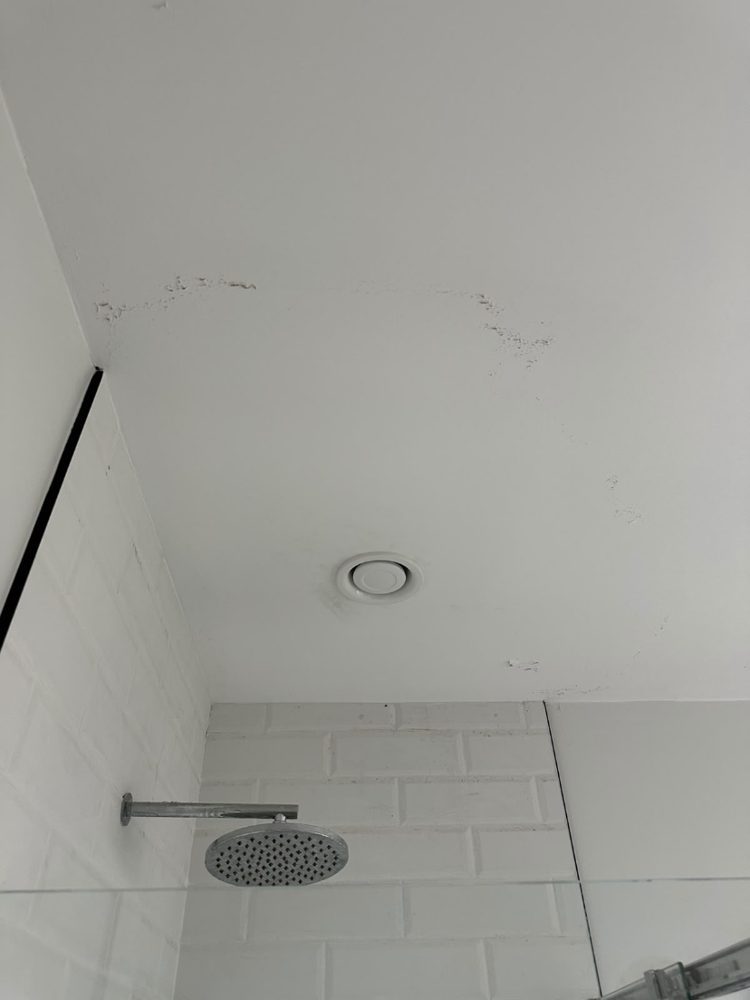
If there is a loft or a ceiling void above the bathroom, go inline. The fan sits in the loft, a duct runs from the ceiling valve to it and another from the fan to the outside. In Terenure, Dublin 6W, we fitted an Air TS 150 Silent in the loft with insulated ducting; in the room all you see is a small round valve above the shower. With a standard wall fan the motor sits in the room, you hear it every time, and it has to be on an outside wall. On a ground floor bathroom with no void above, a quiet centrifugal wall fan is the fallback. Which models we fit and why is in our bathroom extractor fan buying guide.
3. The duct route
Short, as straight as possible, rigid or semi rigid rather than loose flexible duct, supported so it does not sag, and insulated wherever it crosses a cold space. The duct must terminate outside, through a roof vent, soffit or wall terminal, never into the loft. A good route is decided on the survey, before the ceiling is closed; this is the question our team is answering when you see them in a loft with a builder, checking where the duct can run without sharp bends or long cold stretches.
4. Control
A humidity sensor starts or boosts the fan when the air gets wet, which is the right control for a shower room because nobody remembers to switch a fan on. An overrun timer keeps it going after the light goes off. For a family bathroom choose humidity sensing; for a toilet a timer is enough.
5. Make up air
A fan can only extract what can get in. A new bathroom door with no gap under it and no trickle vent starves the fan. Allow a gap under the door or a vent in it.
What it costs in 2026
Inline fan installation, fan in the loft with ducting and grille: €600 to €700 installed. A standard new bathroom fan: €450 to €550. Replacing a fan in the existing position: €200 plus the fan. Supply only, the inline fans we fit most are the Vents TT 100 at €99, the Air TS 100 Silent at €179 and the Air TS 150 Silent at €219. We confirm the figure for your bathroom in a free preliminary quote by email from a photo and your Eircode, and we are happy to talk to your builder or tiler directly about the route and the timing.
The order of works
Survey and duct route agreed; first fix during the plumbing and electrical stage, when the ceiling is open: fan in the loft, ducting, terminal, cable; then the ceiling is closed and tiled; second fix after the tiler: valve fitted, fan commissioned, airflow tested at the valve. Done this way the ventilation is invisible, quiet and never an afterthought.
Frequently asked questions
Where should the extractor fan go in a bathroom?
Above or beside the shower or bath, high up and away from the door, so the steam is pulled out where it is created.
Is an inline extractor fan better for a bathroom renovation?
For most family bathrooms with a loft or void above, yes: quieter, more powerful, and only a flat valve shows in the room.
Do I need an electrician to install an extractor fan in my bathroom?
A fan on the mains in a bathroom zone must be connected by a competent person. Our installers fit and connect the fan as part of the job, timed with your builder’s first and second fix.
Can the fan vent into the loft during a renovation?
No. The duct must terminate outside. A fan venting into the loft moves the moisture onto the roof timbers.
Planning a bathroom in Terenure, Rathfarnham, Kimmage or anywhere in Dublin and Leinster? Send us the plan or a photo of the room with your Eircode and we will email a free preliminary quote within 24 hours, or call (01) 685 6363. Get the ventilation right before the tiler arrives.