
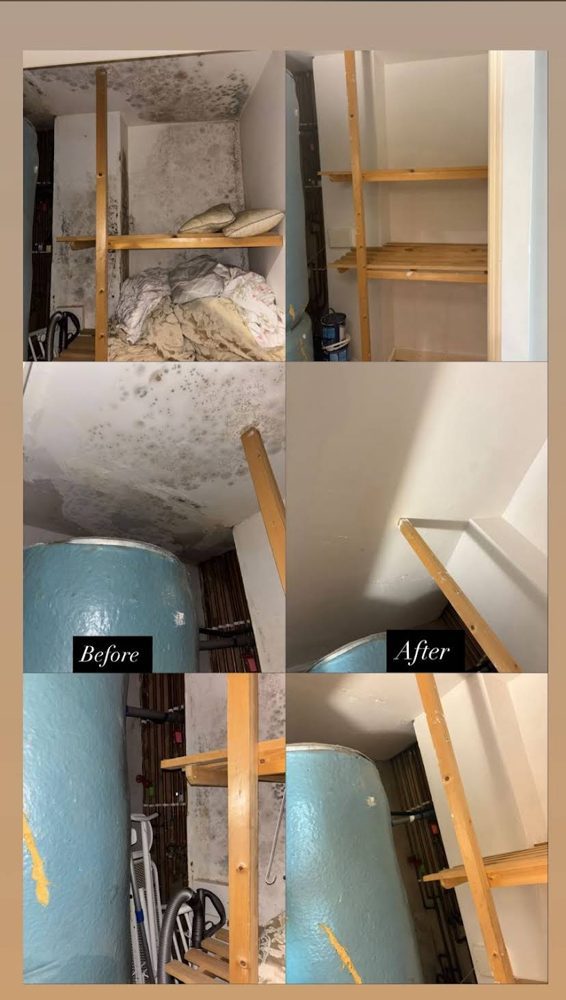
The photos tell it. On the left, a hot press and storage area in a Dublin home with black mould spreading across the walls, the shelving and the cylinder jacket. On the right, the same space after our treatment. Hot presses are one of the classic mould hotspots we see across Dublin, and the reason is built into the room: a warm cylinder, a closed door, no airflow, and clothes and towels stored inside. Perfect conditions. This post explains why it happens, what we did on this job, and how to keep it from coming back.
Key takeaways
- A hot press grows mould because it is warm, closed and still. Warm air holds more moisture; when it meets the colder outer wall or the back of the shelves, it condenses, and the stored fabric keeps it damp.
- Wiping with bleach lightens the colour and leaves the growth behind. Proper treatment removes it; fixing the moisture keeps it away.
- Our approach on every mould job is the same three steps: find the cause, treat the surfaces properly, fix the moisture so it does not come straight back.
- Mould removal with us starts from €350 depending on size and scope, with a one year workmanship warranty on the remediation as long as the ventilation we recommend is in place.
Why a hot press is a mould trap
Three things combine. First, heat: the cylinder keeps the cupboard warmer than the rooms around it, so the air in it carries more water vapour, and any cold surface in there, an outside wall, a cold water pipe, the back of a shelf against the wall, becomes a place for that vapour to condense. Second, stillness: the door stays shut, there is no vent, and nothing moves the air, so the damp patches never dry. Third, fabric: towels, sheets and clothes stored on the shelves soak up moisture and hold it against the wood. Add a bathroom next door with a weak fan, and the hot press becomes the room where the whole house’s humidity goes to settle.
What we did on this job
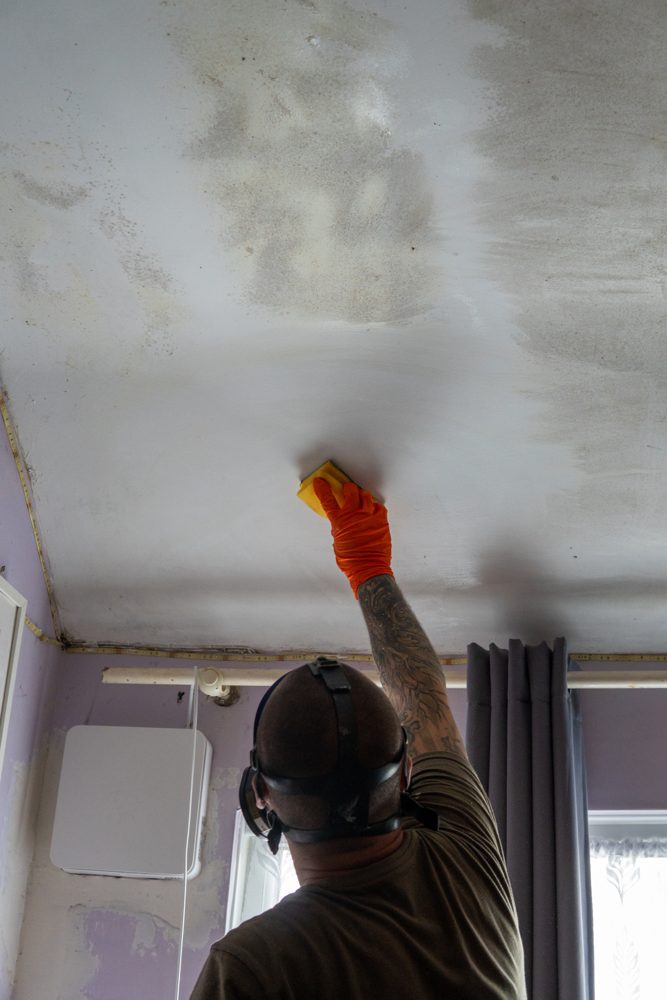
The same three steps as on every mould job. First the cause: mould is a symptom, and the cause is almost always moisture, from condensation, poor ventilation or a leak. Then the surfaces: every affected surface in the hot press was treated properly, not wiped, because bleach can lighten the colour and leave the growth behind. Then the moisture: the owner left with a clear plan to stop it coming straight back. The technician works in full protective equipment throughout, because mould spores are not something anyone should breathe; the second photo shows one of our team treating a bedroom ceiling the same way. Our mould removal service page explains what a full treatment covers.
What we tell every hot press owner
- Leave the door ajar, or fit a vent in it. Still air is the problem.
- Do not stack damp towels in it. Dry them first.
- Keep clothes off the back wall and off the floor, on slatted shelves if possible.
- Insulate cold pipes in the cupboard so they stop sweating.
- Fix the bathroom extraction next door. A hot press rarely has its own damp source; it collects the house’s.
When the hot press is only the visible part
A hot press full of mould is usually a symptom of a house with too much moisture and too little ventilation. If the bedroom windows stream in the morning and there are black spots in the corners of more than one room, treating the cupboard alone buys a few months. Our mould survey in Dublin measures the moisture in the walls and the air and tells you which rooms need extraction or a single room heat recovery unit, so the treatment holds. What a survey and the work cost is on our mould removal cost page.
Frequently asked questions
Why does my hot press get mould?
Warm air from the cylinder meets cold surfaces in a closed cupboard with no airflow, condenses, and the stored fabric keeps the damp in place.
How do I stop mould in the hot press?
Keep the door ajar or vent it, store only dry fabric, keep things off the outside wall, insulate cold pipes, and make sure the bathroom fan next door actually extracts.
Can I just wipe hot press mould with bleach?
Bleach lightens the stain and leaves most of the growth and the cause behind. Proper treatment removes it; the moisture fix keeps it away.
Does the cylinder need to be replaced?
Usually not. The cylinder jacket and the surfaces around it are treated or replaced as needed; the cylinder itself is rarely the problem.
If you can see mould or smell it, send us a few photos with your Eircode and we will email a free preliminary quote within 24 hours, or call (01) 685 6363.