

A bathroom extractor fan does not last forever, and the end rarely announces itself. When it gets loud, when the mirror stays fogged long after a shower, or when black spots appear in the corners of the ceiling, the fan is telling you it has stopped doing its job. Replacing it is a short job for us, and it is one of the cheapest ways to stop condensation and mould in a bathroom. This guide explains how to tell, what we actually do on the day, what changes the price, and which type of fan suits which bathroom.
Key takeaways
- Noise, a mirror that will not clear, water on the window, mould in the ceiling corners and a fan that spins without pulling air are the five usual signs.
- A like-for-like swap into the existing hole, duct and wiring is the simplest job. A fan in a new position means a new opening, new ducting and a new electrical connection.
- Where the bathroom is in the house matters more than the fan: an external wall is simpler than a room in the middle, and an attic above with an existing roof vent is simpler than fitting one.
- Our 2026 prices: a bathroom fan replacement is €200 plus the fan, a standard new bathroom fan installation €450 to €550, and an inline fan installation €600 to €700. We confirm the figure for your bathroom in a free preliminary quote by email once we have the details.
Five signs your bathroom fan needs replacing
It is loud. A rattle or a hum that was not there before usually means worn bearings or a motor on its way out. Cleaning the grille sometimes helps for a few weeks; it rarely fixes it.
The mirror stays fogged. A working fan clears a bathroom mirror within a few minutes of a shower. If it takes twenty minutes, the fan is moving far less air than it should, or the duct behind it has come loose or filled with dust.
Condensation on the window and walls. Water running down the window every morning is the clearest sign the moisture is not leaving the room.
Mould in the corners. Black spots at the ceiling edges, around the window reveal or behind the toilet are where the damp air settles when it is not extracted. The fan is the cause; the mould is the symptom. If the mould has already spread, see our guide to removing mould from a shower and, for anything larger than a patch you can wipe, our mould removal service in Dublin.
It runs but nothing comes out. Hold a sheet of toilet paper to the grille. If the fan does not hold it, it is not extracting, even if it is spinning.
Replacing or fitting new: the difference that sets the price
Two bathrooms that look the same can need very different work behind the wall or ceiling. The things that decide the job, and the price, are:
- Where the bathroom is in the house. A bathroom on an external wall can vent straight out through the wall. A bathroom in the middle of the house has to vent through the ceiling and across the attic, or along a ceiling void, to reach the outside.
- What is above it. If there is an attic above the bathroom and an existing roof vent or tile vent, we connect to it. If there is no vent, we fit one, which is more work and needs the right tile or slate vent for your roof.
- Replacing or fitting new. Swapping a fan into the existing opening, duct and wiring is the simplest job. A fan in a new position needs a new opening through the wall or ceiling, new ducting and a new electrical connection.
- Standard or timer fan. A standard fan runs with the light. A timer fan runs on for a set time after the light goes off, which is what most bathrooms need.
In 2026 that means €200 plus the fan for a straight replacement, €450 to €550 for a standard new installation and €600 to €700 for an inline fan with ducting to the outside. Send us these details in a few lines with a photo of the current fan and we email a free preliminary quote. If an on-site survey or a detailed survey report is needed, that is charged separately, and we tell you before we come out.
What we do on the day
Two recent customers described the job better than we can. One wrote in a Google review that we fitted “2 inline extractor fans for my bathrooms and a centrifugal extractor fan for downstairs”; another that “Otto and Ovidiu replaced the extractor fan in our bathroom” and “left the bathroom spotlessly clean”. That is the standard: in, out, and nothing to clean up after us.
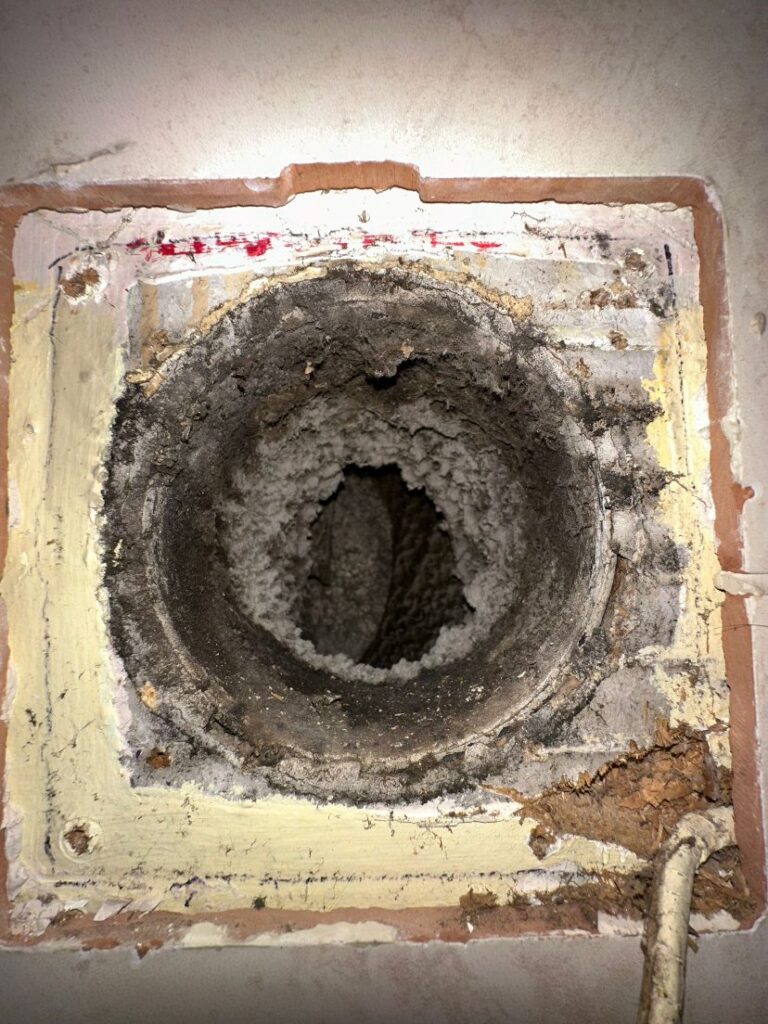
For a straightforward replacement the steps are: isolate the power, remove the old fan and grille, check the duct behind it and clear or replace it if it is crushed or full of dust, fit the new fan, connect it, test the airflow and the timer, and make good the finish. For a new installation we also cut the opening, run the ducting to the outside and fit the external grille or roof vent. The wiring for a bathroom fan must meet the National Rules for Electrical Installations (I.S. 10101), and a fan close to a bath or shower must be suitable for that position, which we check before fitting. Where a customer wants the electrical connection made by a qualified electrician, we arrange it.
Which fan to fit
- Axial wall or ceiling fan. The standard bathroom fan for a short duct run straight through an external wall or a short run to the outside. Quiet modern models are a big step up from a fan fitted ten years ago.
- Centrifugal fan. For longer duct runs, for example a bathroom in the middle of the house where the air has to travel across the attic. It pushes air further against the resistance of the duct.
- Inline fan. Mounted in the attic or ceiling void, away from the bathroom, with a grille in the ceiling. Quietest in the room, and the usual answer when the bathroom has no external wall.
- Single room heat recovery unit. Not a replacement for a fan in the strict sense, but if the bathroom is cold as well as damp, a single room heat recovery unit extracts the moist air and brings in fresh air without losing the heat.
We fit and replace bathroom fans across Dublin and the surrounding counties; see our bathroom extractor fan installation and replacement service and, for homes west of the city, our ventilation installation in Kildare page.
Frequently asked questions
How long does a bathroom fan replacement take?
A like-for-like swap is the quickest job we do; a new installation with new ducting takes longer because the opening and the duct run have to be made.
Can you replace a fan in a bathroom with no window?
Yes. A bathroom with no window needs mechanical extraction more than any other room. If there is no external wall, we fit an inline or centrifugal fan and run the duct to the nearest outside point.
Do I need to replace the ducting as well?
Not always. If the existing duct is rigid, intact and clear, we reuse it. Crushed flexible duct or duct full of dust is replaced, because a new fan on a bad duct moves very little air.
Will the new fan be quieter?
Almost always. Modern fans are rated at far lower noise levels than fans fitted a decade ago, and a fan on a clear duct is quieter than one struggling against a blocked one.
What does it cost?
In 2026: €200 plus the fan for a replacement, €450 to €550 for a standard installation, €600 to €700 for an inline fan. The position of the bathroom, what is above it and whether the fan is a swap or a new fit decide where in the range your job lands. Send us the details and a photo and we email a free preliminary quote the same working day.
Does replacing the fan get rid of the mould?
It stops the cause. Existing mould still has to be cleaned or treated, and if it has spread into plaster or sealant it needs proper removal. We do both.
Fill out the form below with your Eircode, a line about the bathroom and a photo of the current fan, and we will come back to you with a preliminary quote by email. If it is urgent, call us on (01) 685 6363.