
If you’ve got a single room heat recovery unit on your wall, you already know it does a brilliant job pulling stale air out and bringing fresh air in. But like anything mechanical in your home, it needs a bit of looking after. And the good news? Cleaning the filter is one of the simplest maintenance jobs you’ll ever do.
To clean a single room heat recovery unit, you switch off the unit, remove the front panel, take out the filter, vacuum both sides of it, pop it back in and replace the panel. The whole thing takes five minutes. It’s that simple, and doing it regularly keeps the unit working efficiently and your air quality where it should be.
We see a lot of homeowners across Dublin and around Ireland who install these units and then forget about the filter entirely. That’s a mistake. A clogged filter means the unit has to work harder, and eventually it won’t shift air the way it’s supposed to. Below, we’ll walk through the full cleaning process, how often you should be doing it, and when it might be time to call in a professional.
Why Does a Single Room Heat Recovery Unit Need Cleaning?
Single room heat recovery units work by continuously exchanging stale indoor air for fresh outdoor air. Inside the unit, a filter catches dust, pollen and other particles before they enter your room. Over time, that filter fills up.
When the filter gets blocked, airflow drops. You might notice your room feels a bit stuffy, or condensation starts building up on the windows again. The unit is still running, but it can’t do its job properly because it’s essentially breathing through a dirty cloth.
In Ireland’s damp conditions, a blocked filter can also contribute to moisture problems and even mould growth if left long enough. Keeping the filter clean protects both the unit and your home.
How Do You Clean the Filter Step by Step?
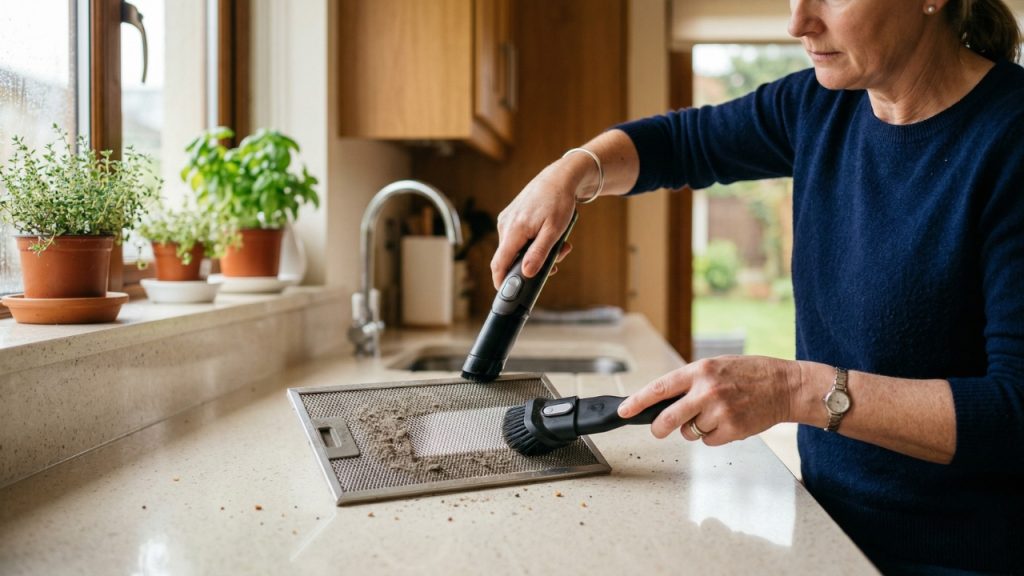
Here’s the full process. It genuinely takes less time than making a cup of tea.
Start by switching off the ventilation unit. Most single room HRV units have a button or switch on the side of the unit itself. Press it to turn the unit off before you do anything else. There’s no need to isolate the electricity at the fuse board for a simple filter clean, but the unit must be off.
Next, remove the front panel. On most models (including popular units like the Vents TwinFresh range), the front cover either unclips or slides off. No tools needed. If yours has screws, a standard screwdriver will do the job.
Once the panel is off, slide the filter out. It’s usually a small rectangular or cylindrical piece that slots in and out easily. Take note of which way it faces so you put it back correctly.
Now vacuum both sides of the filter. Use a standard household vacuum with a brush attachment. Go over the front and back gently to remove dust and lint. Don’t press too hard as you don’t want to damage the filter material. If you’ve got a unit with a ceramic heat exchanger, you can give that a light vacuum too while the filter is out, though most of the buildup sits on the filter itself.
Slide the filter back into place and reattach the front panel. Turn the unit back on using the same button you used to switch it off. Done.
How Often Should You Clean the Filter?
For most Irish homes, cleaning the filter every two to three months is about right. If you live near a busy road, have pets, or if someone in the house has allergies, you’ll want to check it monthly.
During autumn and winter, filters tend to pick up more debris. Between pollen in spring and dust in summer, there’s really no time of year where the filter gets a break. Regular checks take seconds and will tell you whether a clean is needed.
It’s also worth knowing that filters don’t last forever. Even with regular cleaning, a filter will wear out over time. If yours looks torn, warped or permanently discoloured, replace it rather than trying to clean it again. Replacement filters for most single room HRV units cost between €15 and €40, and most are available online or through your installer.
The SEAI recommends that mechanical ventilation systems are maintained regularly to keep them running efficiently, and filter cleaning is the single biggest thing a homeowner can do themselves.

What Happens if You Never Clean the Filter?
Ignoring filter maintenance doesn’t just reduce air quality. It can shorten the lifespan of the unit itself.
When a filter is fully clogged, the fan motor works harder to push air through. That extra strain means higher electricity usage and more wear on the motor over time. A unit that should last 15 to 20 years might give up much sooner if the filter is never touched.
You’ll also lose the heat recovery benefit. These units are designed to capture warmth from outgoing air and transfer it to incoming fresh air, which is what makes them so efficient in Ireland’s cold, damp conditions. A dirty filter disrupts that exchange, so you end up paying more to heat your home while getting worse air quality. It’s a lose-lose situation.
When Should You Call a Professional?
Filter cleaning is a job any homeowner can handle. But there are times when you need someone with experience to look at the unit properly.
Warning Signs That Something Bigger Is Wrong
If you’ve cleaned the filter and the unit still isn’t moving air well, there could be a blockage in the wall duct or an issue with the fan motor. Reduced airflow after a fresh filter clean is one of the clearest signs that something deeper needs attention.
Unusual noises are another red flag. Rattling, grinding or a high-pitched hum usually means a fan bearing is wearing out or something has come loose inside the housing. And if you notice a musty smell even after cleaning, the ductwork itself may need clearing.
What Does a Professional Service Include?
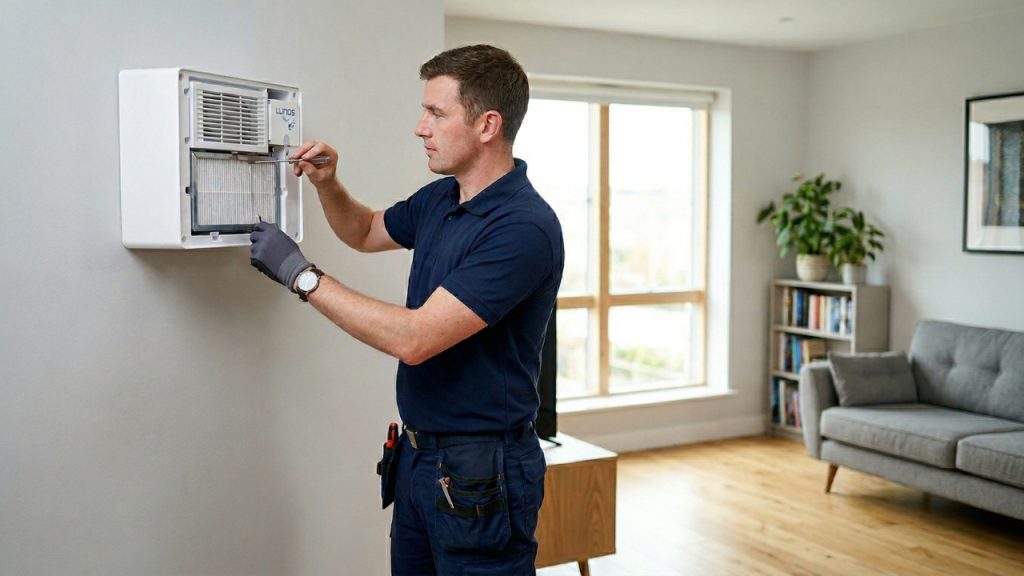
For anything beyond basic filter maintenance, it’s worth getting a professional service carried out. A trained technician can check the fan, the heat exchanger, the ductwork and the seals, all things that aren’t accessible to the average homeowner. They’ll also test airflow rates and make sure the unit is balanced correctly.
VentSolve’s in-house team of certified technicians services single room HRV units across Dublin, Meath, Kildare and Wicklow. If your unit needs more than a filter clean, you can call (01) 685 6363 or fill out the form at ventsolve.ie to get a quote within hours, not days.
Quick Cleaning Checklist for Single Room HRV Owners
Before you start, make sure you’ve got a vacuum with a brush attachment handy. Then follow this order every two to three months.
- Switch off the unit using the button on the side
- Remove the front panel (unclip or unscrew)
- Slide out the filter and note its orientation
- Vacuum both sides of the filter gently
- Check the filter for tears or permanent discolouration
- Replace the filter if it’s damaged; otherwise slot it back in
- Reattach the front panel
- Turn the unit back on
Five minutes every couple of months is all it takes to keep your single room heat recovery unit running the way it should. Don’t let a dirty filter undo the good work your ventilation system is doing for your home. And if anything feels off, get a professional to take a look before a small issue turns into an expensive one. VentSolve offers free consultations and quotes, so there’s no reason to put it off.
FAQs
How do you clean a single room heat recovery unit filter?
Switch off the unit, remove the front panel, and slide out the filter. Vacuum both sides gently with a brush attachment, then replace the filter and panel and turn the unit back on. The whole job takes about five minutes.
How often should I clean my single room HRV filter?
Every two to three months for most Irish homes. If you have pets, live near a busy road, or someone in your household has allergies, check the filter monthly.
When should I replace the filter instead of cleaning it?
If the filter looks torn, warped or permanently discoloured, it’s time for a replacement. Most filters for single room HRV units cost between €15 and €40 and are available from your installer or online.
Can I wash the filter with water?
It depends on the model. Some filters are washable and can be rinsed with warm soapy water and left to dry fully before reinstalling. Always check the manufacturer’s instructions for your specific unit before using water.
What happens if I never clean the filter?
A clogged filter reduces airflow, increases energy usage and puts strain on the fan motor. Over time, it can shorten the lifespan of the unit and reduce heat recovery efficiency, which means higher heating costs and poorer air quality.
Do I need a professional to clean my single room heat recovery unit?
For basic filter cleaning, no. Any homeowner can handle it. But if you notice reduced airflow, unusual noises or persistent smells after cleaning, it’s best to book a professional service to check the fan, ductwork and heat exchanger.